Climate change adaptation in construction means designing and retrofitting buildings for the weather they will actually face: higher temperatures, heavier rainfall, flooding and rising sea levels. Those changes are already here, in extreme and unpredictable weather that strains communities, infrastructure and the environment, and the built environment has to adapt to them now. Below we cover how the impacts differ by region, how to build resilience into each phase of a project, how climate projections inform design, what retrofitting existing assets involves, and how to balance resilience against the resources it consumes.
The impacts differ by region
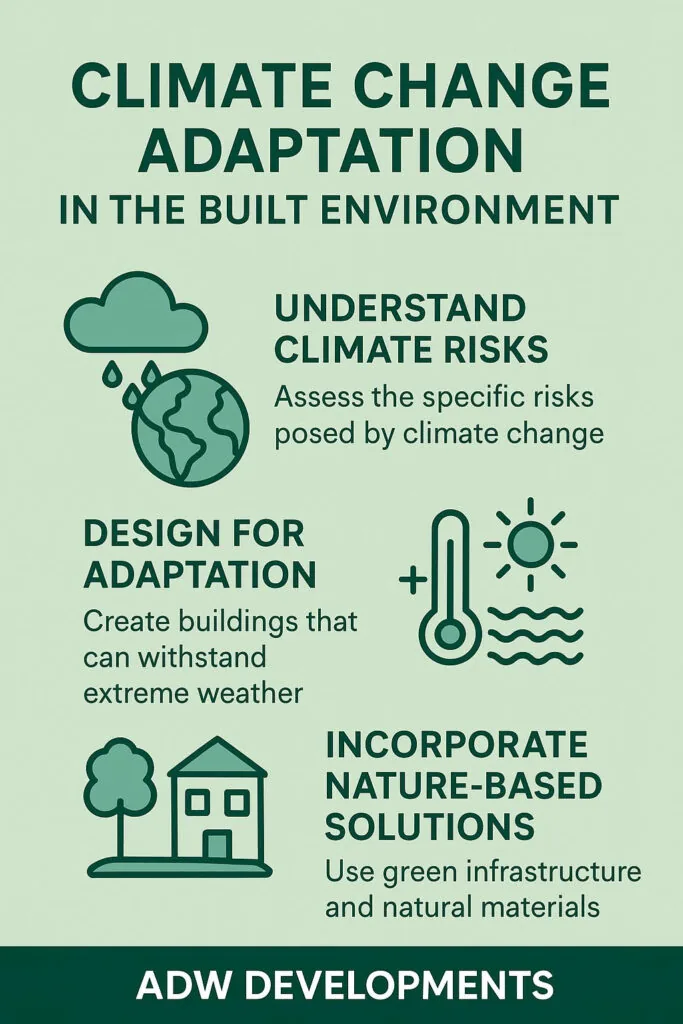
Climate change does not arrive the same way everywhere, so adaptation cannot be the same everywhere either. Some regions face escalating temperatures and prolonged heatwaves. Others face more frequent and more intense rainfall, and with it a higher flood risk. Many are seeing extended droughts that affect water resources and agricultural productivity. In the UK the expected impacts are rising sea levels and heavier rainfall, both of which will make flooding worse and cause substantial damage to buildings and infrastructure. Without timely adaptation those impacts undermine the safety, function and life of essential assets, and disrupt lives and economies with them.
The first step, then, is to understand the local impacts: a detailed assessment of the regional climate projections and what they are likely to do to the infrastructure in question. Only then can a strategy target the specific vulnerabilities instead of applying a one-size-fits-all answer.
Resilience in every phase of a project
Adapting to climate change changes how a project is conceived and delivered. Resilience has to be present in every phase, from the first design and planning work through construction, operation and maintenance, so that the asset holds up in extreme events and still runs efficiently as the climate shifts. Three things follow from that. Design for extreme events, with elevated structures, resilient building envelopes and passive cooling. Balance the resource use: avoid over-specification and look for the solution that protects without unnecessary material or energy. And use climate predictions to future-proof the design, which lowers operating costs and extends the life of the building. Resilience then runs through the whole life cycle, and adaptation and the wider sustainability goals pull in the same direction.
Climate projections in design
Knowing what conditions are coming lets you design for them, and it protects both the building and its long-term performance. Projections feed into four kinds of decision.
| Decision | Measures |
|---|---|
| Flood resistance | Elevated structures, advanced drainage, permeable pavements and water-resistant materials |
| Material durability | Materials that withstand higher temperatures, humidity or salinity |
| Energy efficiency | Natural ventilation, orientation, insulation and renewables, to reduce dependence on mechanical systems |
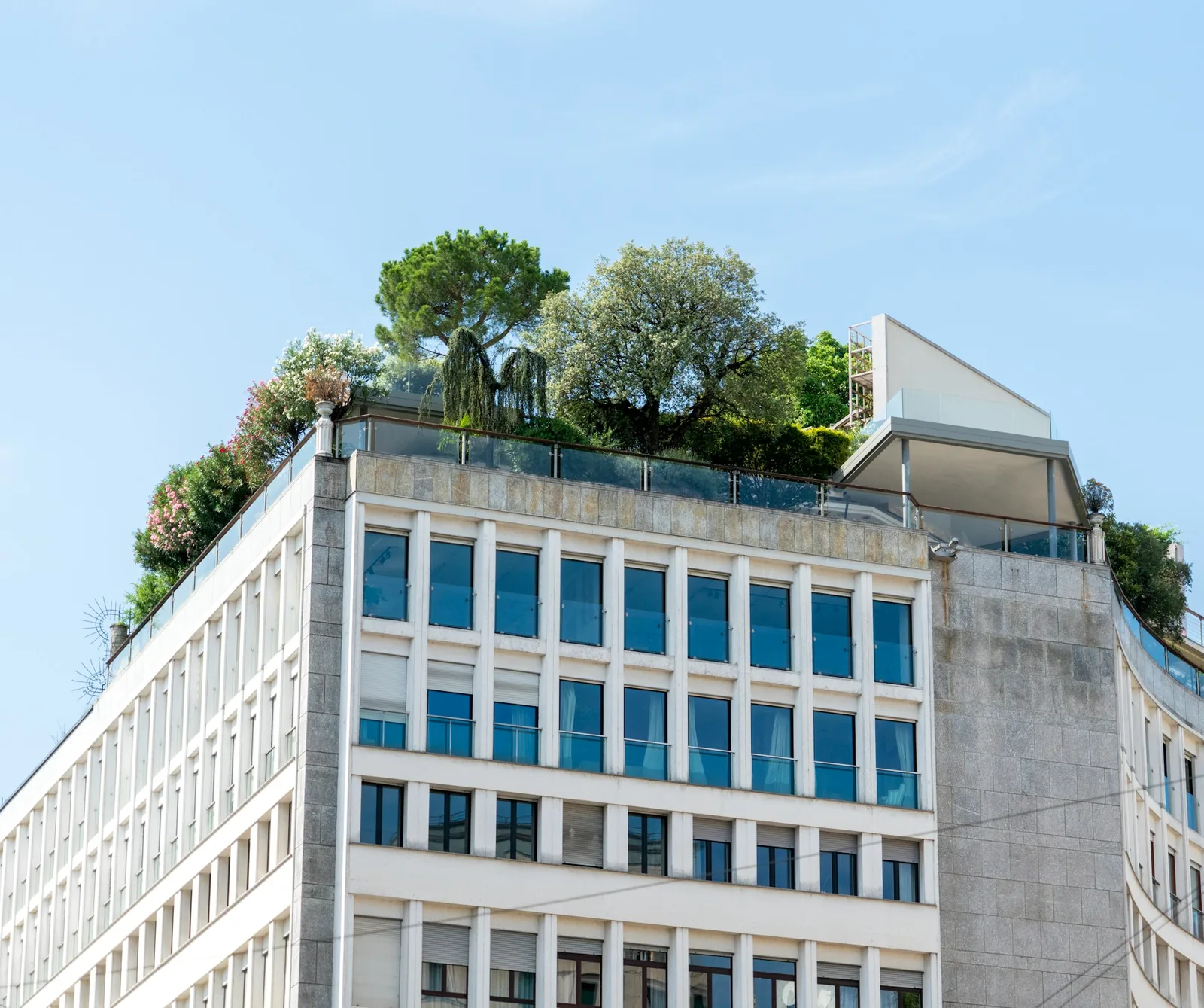
| Green infrastructure | Green roofs, permeable surfaces and urban greenery, to reduce flooding and urban heat |
Together these measures make the asset more resilient, cheaper to run and better able to adapt to long-term environmental pressure.
Retrofit of existing assets
A new building can have resilience designed in from the ground up, but a large proportion of the built environment was never designed with climate change in mind. Retrofitting is how those assets keep functioning. The upgrades that do most are better insulation and building envelopes; localised flood defences such as barriers and raised entrances; renewable energy systems that reduce reliance on fossil fuels; passive or reflective cooling; and upgraded drainage and water management. Retrofit also brings benefits beyond resilience: lower operating costs, better energy efficiency and greater comfort for the occupants.
The balance between adaptation and sustainability
Resilience is essential, but over-engineering it uses resources unnecessarily and raises embodied carbon, so adaptation has to be balanced against sustainability. Four considerations keep the balance. Prioritise low-carbon, durable materials and efficient construction. Use life cycle assessment to compare the environmental impact of the options before choosing one. Design for flexibility, so that future upgrades do not need a costly overhaul. And use nature-based solutions, such as wetlands and urban forests, which deliver ecological and social benefits as well as protection. The result is a solution that is resilient and environmentally responsible, with long-term performance secured without compromising sustainability.
Delivering this takes policymakers, designers, engineers, contractors and communities working together, with climate risk addressed from the earliest design stage and resilience carried through the life of every asset. The durability and resilience of buildings, and the whole life carbon they carry, are covered in more detail in our Knowledge Share.